Featured Video

Privacy Policy Privacy Policy :This blog may from time to time collect names and/or details of website visitors. This may include the mailing list, blog comments sections and in various sections of the Connected Internet site.These details will not be passed onto any other third party or other organisation unless we are required to by government or other law enforcement authority.If you contribute content, such as discussion comments, to the site, your contribution may be publicly displayed including personally identifiable information.Subscribers to the mailing list can unsubscribe at any time by writing to info (at) copsandbloggers@googlemail.com. This site links to independently run web sites outside of this domain. We take no responsibility for the privacy practices or content of such web sites.This site uses cookies to save login details and to collect statistical information about the numbers of visitors to the site.We use third-party advertising companies to serve ads when you visit our website. These companies may use information (not including your name, address, email address or telephone number) about your visits to this and other websites in order to provide advertisements about goods and services of interest to you. If you would like more information about this practice and would like to know your options in relation to•not having this information used by these companies, click hereThis site is suitable for all ages, but not knowingly collect personal information from children under 13 years old.This policy will be updated from time to time. If we make significant changes to this policy after that time a notice will be posted on the main pages of the website.

Download

frontline dispatches

8.9.14

'Hatchet' Gerard Kavanagh shot dead in Costa del Sol pub

Gerard Kavanagh was shot dead in a bar on the Costa del Sol Notorious gangster Gerard “Hatchet” Kavanagh was gunned down by two masked assassins yesterday as he relaxed in a Spanish pub.

The 44-year-old was riddled with up to nine bullets by the hitmen, who burst into the Costa del Sol bar in Elviria, near Marbella, just before 4pm Irish time on Saturday. A source said: “The shooting had all the hallmarks of a professional hit.” Terrified gangster Kavanagh tried to flee after spotting the assassins coming through the door of Harmons Irish Bar in Elviria, a 20-minute drive east of Marbella. But it was too late for the doomed crime boss, who fell to the ground in a hail of bullets surrounded by a pool of his own blood. A burnt-out BMW X3 was discovered nearby shortly after the shooting, which happened in broad daylight around 4pm Irish time. Spanish police were last night carrying out a forensic search of the vehicle to see if it was used as the getaway car. A source said: “The gunmen were wearing balaclavas and were dressed from head to toe in black. “The shooting had all the hallmarks of a professional hit. It looks like they picked a time when they knew the bar wasn’t going to be busy. “It is believed the victim was trying to flee when he was shot because many of the nine bullets he took hit him in the back.”

Notorious Irish gangster Gerard 'Hatchet' Kavanagh shot dead in Costa del Sol bar  A police spokesman said: “A fatal shooting has occurred near to Marbella. We are investigating.” Witnesses to the shooting told last night how the gunmen shot their victim in the back as he talked with a mystery woman – and finished the job off as he tried to run for his life. One said: “He was sat on a chair in a pair of green swimshorts talking to a woman I’d never seen before. “The men rushed up to him from behind and shot him two or three times in the back and, as he tried to run for the safety of the bar, finished the job off with a shot to the back of the head. “They turned him over to see if he was dead before fleeing. It was absolutely horrific. “The police took the dead man’s black Audi away and undertakers removed his body around 8pm.” Another said: “The killers left the engine on their getaway car running. “I’ve been told it was found burnt out at a supermarket just down the road.” A pal, who asked not to be named, said: “The dead man was lying face down just inside the door of the bar when I saw him. “He was dressed in just a pair of shorts and there was a lot of blood.” Harmons bar is sandwiched between two restaurants in a pretty, tree-lined square just off the N340 dual carriageway running along the Costa del Sol, which was once dubbed the Road of Death because of the number of accidents along it. The bar was closed last night after the horror shooting. A woman who answered a side door said: “Sorry we’ve got nothing to say. We’re not going to speak.” The owner of a neighbouring bar said: “I don’t want to say anything. This is very bad for business.” Kavanagh’s body was taken to the Costa del Sol State Hospital for X-rays last night to determine exactly how many bullets were in his body. Kavanagh, from Ben Bulben Road in Drimnagh, West Dublin, was a senior member of the notorious Kinahan gang, controlled by godfather Christy Kinahan, who is based on the Costa del Sol.

The gang is involved in drug debt collection, drug dealing on an international scale and is suspected of ordering several executions in Crumlin-Drimnagh feud. Kavanagh was jailed for four years in 1996 when he was just 25 for dealing heroin in the Crumlin area. Back then his defence had argued that Kavanagh was only before the court as he had developed a drugs habit forcing him to work as a courier for gangs. The Dublin Circuit Criminal Court was told that he was involved in a chain of drug distribution headed by drug barons. Following his sentence, Kavanagh paired up with Tallaght gangster Paul Rice, who was jailed for 10 years in July 1995 after pleading guilty to the robbery of a bank in which shots were fired. Together they rose to the top of the drug ladder before Kavanagh packed up and moved to Spain where he was reported to be supplying most of Tallaght and a large area of Drimnagh with illegal drugs. He has been living in Benalmadena for almost a decade with his wife and two children where his daughter is a star of the show-jumping circuit and his son is a professional boxer. Security sources say that the shooting has now raised fears for the safety of the Kinahans.

The scene of the shooting is near to the luxury Don Carlos Hotel, which this weekend is hosting the 19th US-Spain forum. The Spanish ambassador to the USA and the American ambassador to Spain were among guests who opened the three-day event and security had been stepped up significantly in the area. Kavanagh was jailed for four years in March 1996 after he was caught with €3,500 worth of heroin and cannabis. In court, Detective Eamonn Maloney said that Kavanagh was “a major figure in drug supplies in the Crumlin, Drimnagh and Dolphin’s Barn areas of Dublin for some time”. He was forced to flee Ireland after he was targeted by anti-drug vigilantes and the Crininal Assets Bureau.

7.9.14

Irish man shot dead in suspected gangland murder in Spanish bar

Irish man shot dead in Spain was a well-known criminal who closely associated with some of the biggest drug dealers in Ireland and who gardaí believe was the intended target of a botched murder bid last month. The dead man, in his 40s and from Dublin, was singled out in a bar on the Costa del Sol on Saturday afternoon by two masked gunmen who fired at least nine shots, most of which are believed to have hit the victim.

The victim tried to run to safety when he saw the gunmen coming for him but collapsed on the premises when wounded. He was unresponsive when the emergency services later arrived at the scene. He was taken by ambulance to hospital but was pronounced dead shortly after arriving. The murder occurred just before 5.30pm local time at an Irish bar in Elivira, on the outskirts of Marbella. A BMW the gunmen are believed to have been driven to and from the scene in was later found burnt out by Spanish police.

31.8.14

SCARFACE MURDER:A man identified as Amsterdam crime boss Samir B. was murdered in Benahavis, Marbella

A man identified as Amsterdam crime boss Samir B. was murdered in Benahavis, Marbella in Spain on Wednesday. image: inmo-andalucia.com The 36-year-old, also known as “Scarface,” was killed in the Spanish town near Marbella on Wednesday afternoon, Het Parool reports.


News reports speak of a gangland execution. Samir B. was in the Monte Halcones mall in the picturesque mountain village around 2.00pm when he was shot multiple times in his back and head by two assailants. He was apparently shot on his way out of a storefront in the shopping center. Witnesses called the authorities, but the emergency services could do nothing to resuscitate him.

The Dutch-Moroccan victim from near Sloterdijk in Amsterdam West has been named in connection with sizeable drug deals. Crimesite.nl writes that he was the largest drug dealer in the city, and he actually marked his cocaine blocks with his own stamp. B. had relocated to Spain a few years back, but apparently his hold on the Amsterdam underground remained. Het Parool writes that B. had a long career in the underworld of Amsterdam West. He grew to be one of the biggest crime bosses in the city.   In June 2010 he was arrested there and extradited to the Netherlands, in connection with the death of 12-year-old Danny Gubbels in Breda; the boy died when someone opened fire on his parent’s trailer and B. was named. He was released after only a few days in prison here, for lack of evidence.   His execution in Benahavis is being investigated by the local police, as well as the Spanish military police force, Guardia Civil, and national police agents. Earlier this month, another of Amsterdam’s criminal leaders, Derkiaoui van der Meijden, was also killed in Amsterdam Oost.

25.8.14

240 kilos of cocaine have been found in the hull of a yacht in Huelva

240 kilos of cocaine have been found in the hull of a yacht in Huelva Agents from the National Police, in collaboration with the United States DEA, have arrested six people; four in the province of Huelva and two in Madrid in the three searches carried out as part of the same operation. The investigation started at the beginning of April, when large amounts of cocaine has been arriving in Europe by sea, carried out by an international organisation. Further investigations revealed the head of the organisation is a Spaniard, who lives in Colombia, and who had returned to Spain recently, presumably, to coordinate a consignment of the drug. The rest of the organisation are all Colombian, and had the job of providing logistic support on land for the reception and extraction of the drug.

Marbella boxer ring return after trainer shot

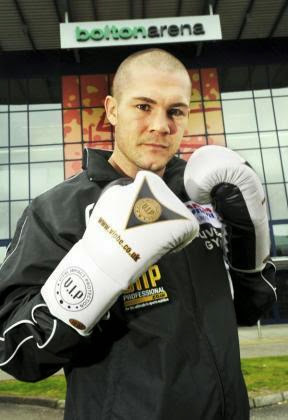
MATTHEW MACKLIN, the Marbella based boxer, whose proposed fight against Argentine fighter, Jorge Sebastien Heiland in a WBC eliminator on August 30 was postponed after his trainer, Jamie Moore, was shot in Marbella, is set for a swift ring return. His opponent is as yet unnamed, however, Macklin is expected to undertake his 36th professional bout next month on September 27, on the Felix Sturm - Paul Smith WBA middleweight ‘Super’ title fight undercard in Kiel, Germany. If as expected Macklin wins, the three-time world title challenger expects to be returning to Dublin for the Heiland fight on November 15. Macklin, hopes the Heiland fight will bring him a fourth shot at a world title, as promoter Eddie Hearn looks to guide him to the big title that has eluded him so far.

Irish teenager being held on attempted murder charge in Costa del Sol

An Irish teenager is in custody on an attempted murder charge after a violent street fight on the Costa del Sol. The 17-year-old was part of a group of four Irish holidaymakers who got into a row over a girl during a night out in the upmarket resort of Puerto Banus near Marbella. His brother allegedly punched a friend unconscious before the teenager kicked him in the head as he lay on the ground. The victim was rushed to the nearby Costa del Sol Hospital before being transferred to a specialist centre in Malaga so he could be treated for “life-threatening” head injuries.

Doctors have told police he cheated death because of the rapid medical attention he received. The altercation happened around 3am on August 14 in a street a short walk from Puerto Banus port named after singer Julio Iglesias, who owns a house in mountains a short drive away. Investigators say they believe the four men, who had been out drinking together, rowed over a girl. Local police made the arrests at the scene after witnessing the assault from a distance. The injured man, who like the other three Irish holidaymakers involved has not been named, is now being treated in a normal ward after spending several days in an induced coma in intensive care. Police from a specialist anti-violence unit based in Malaga have led the investigation.

A youth court judge remanded the teenager to a young offenders’ institution after quizzing him in a closed court session. His brother, whose age is not known, has been released on bail but is thought to have had his passport taken away from him so he cannot leave Spain. A trial date has yet to be set. The Irish teenager is expected to be held for custody for several months before he is released ahead of trial. A source close to the case said: “The judge quizzed him on an attempted murder charge because medical experts who examined his alleged victim concluded the consequences of the assault could have been much more serious if he hadn’t received rapid medical attention.”

22.8.14

Climate change is gradually turning Spain into a fire zone

Spain’s changing climate and economy fuels wildfire risks.Climate change is gradually turning Spain into a fire zone – and a change in the economic climate is inflaming the situation.

The combined forces of climate, economic and social change are leaving Spain increasingly exposed to the damaging and costly effects of wildfires.

A research group reports that a mix of factors is behind the rise in both the numbers of forest fires and the areas of land scorched over the last 40 years.

Vanesa Moreno, a researcher in the geography department at the University of Alcalá in Madrid, and colleagues studied the pattern of fires in Spain from 1968 to 2010.

Although Spain, like much of southern Europe, is expected to become more arid with global warming, and although some Mediterranean vegetation is adapted to − and even benefits from − natural fire outbreaks, the picture is not a simple one.

In the moister Atlantic north-west of the country, there are two fire seasons − at the end of winter, and in the summer. In the Mediterranean region, fires are more frequent in the long, hot summer.


18.8.14

Fire in Benahavis

A fire has broken out in Benahavis, near Marbella. This photo was taken on the road between Estepona and San Pedro. The cause of the fire is still not yet known, but follows in the wake of a serious fire in Los Montes de Malaga exactly a week ago. The fire in Los Montes devestated 260 hectares of natural park. So far this year there have been 20 such fires in Malaga Province, which experts say is within the average range of annual fires.

Saudi prince's convoy in Paris attacked by gunmen

Heavily armed men have attacked a convoy of cars belonging to a Saudi prince, stealing 250,000 euros (£200,000; $330,000), police say. The convoy was heading through northern Paris on its way to Le Bourget airport late on Sunday evening when it was raided, reports say. The gunmen seized a vehicle carrying the money and documents, later releasing the driver and two others. The convoy was said to have come from the Saudi embassy. No-one was hurt. The gunmen, reportedly armed with Kalashnikov rifles, targeted a Mercedes mini-van at 21:15 (19:15 GMT) on the northern ring road, or peripherique, at Porte de la Chapelle, on the edge of Paris.

The motorcade, belonging to a Saudi prince, was targeted by eight people in two separate vehicles who pointed their guns at the driver of the Mercedes, forcing him to stop, French media reported.

The men then drove the vehicle away with the driver and the two other Saudis inside. No shots were fired but the Saudis were later freed and the vehicle eventually found burned out.

"In the vehicle there was roughly 250,000 euros in cash and official documents from the embassy," police union spokesman Rocco Contento told BFM TV news.

There has been a weekend of terror for immigrants in Tangiers

Immigrants who are waiting in Tangiers to cross into Spain have been attacked and their homes ambushed. The NGO’s at the scene fear the aggression against the Sub-Saharans will force them to try to cross the Strait to escape whatever the weather conditions.

The problem started on Friday near the Tangiers airport. The Sub-Saharan’s were told a bus was going to Spain and some 20 women and their children took up the offer. But the bus took them to a local dance festival of African culture called Twiza which was being held in Tangiers for some days. When they realised they had been fooled they returned home, and met a group of Moroccan men armed with machetes and sticks who started to hit them.

Five of the women suffered stab wounds and others suffered abuse. Spanish volunteer, Helena Maleno, was among them and believes the violence is being organised by criminal groups. She was sexually molested by one of the men. She said the Moroccans speech was always the same, ‘We want to clear up here, go to Spain’. Last year an immigrant died when he fell off a wall during a police raid, bringing charges of murderers against the police amid violent scenes as you can seen in the video below.

17.8.14

Ebola Alert In Alicante After Man Taken Ill

An ebola alert has been activated in Alicante, Spain, after a young Nigerian man was admitted to hospital with fever and vomiting. Spanish health authorities activated alert protocols after the man showed "several symptoms" of the disease.

The alert comes a week after a Spanish priest who contracted ebola while working in Liberia died in hospital in Madrid. The man was taken ill in the eastern city of Alicante Father Miguel Pajares was the first European infected by a strain of the virus that has killed more than 1,000 people in West Africa.

He was airlifted from Liberia to Spain on August 7 after becoming infected while working for a non-governmental organisation there. The 75-year-old was flown to Europe for treatment with his co-worker Juliana Bohi, a nun who has since tested negative for the disease. Elsewhere, 17 ebola sufferers have fled a Liberian clinic raided by looters who stole blood-stained sheets - sparking fears the virus will spread.

16.8.14

ISIS terrorists discovered in Morocco

MOROCCAN anti-terror services working in collaboration with Spanish police officers have broken up a jihadist terror cell in Morocco. In total nine members of the cell, reported to be linked to the Islamic State of Iraq and Syria (ISIS), were detained on Thursday in the three Moroccan cities of Fes, Tetouan and Fnideq. The terrorists were working to recruit new members to the cell with the objective of sending them off to fight in the conflicts currently underway in Syria and Iraq.

It is believed that some of the group made frequent visits to the Spanish city of Ceuta, located on the north coast of Morocco, with the intention of converting people to their cause and raising financial aid. The Spanish Interior Minister has linked those arrested with ISIS, and confirmed that they had received training in the use of weapons and the manufacture of explosives with the goal of participating in suicide attacks or travelling to conflict zones in the Middle-East.

It has also come to light that there were plans to carry out a terror attack on Moroccan soil. Computers and other data-storage devices used by the jihadists are currently being examined for evidence of concrete plans. The investigation remains open within the three cities, with police from both nationalities continuing to work together. Government sources commented that the operation reflects on the excellent relationship that exists between Spain and Morocco when combating terror in the region.

Luggage thieves caught at airport

THE Guardia Civil have arrested two people under suspicion of stealing suitcases from distracted airport passengers. Within the Guardia Civil brief of the Safer Tourism Plan which has been put in place to prevent theft from tourists visiting Malaga, the officers at the airport have caught two people who were taking national flights with only hand baggage and then taking advantage of distracted tourists arriving at the baggage carousels to steal their luggage while they were looking away. On several occasions they also, allegedly, pick-pocketed passengers as well as taking their hand baggage while they were retrieving their check in luggage. Investigating officers calculate that they have stolen around €21,000 worth of luggage and wallets.

Former boxing champ shot in Marbella to be released from hospital

FORMER boxing champion Jamie Moore, who was shot in Marbella, is to be released from hospital today. The 35-year-old, from Walkden, was shot in the leg and hip while in the Spanish town, where he was training Birmingham middleweight Matthew Macklin. Mr Moore, a former European light-middleweight champion, did not suffer permanent damage in the attack and was transferred to his local hospital at Salford Royal.

Tweeting about his release from hospital, Mr Moore said: “Being discharged from hospital today, still a way to go before I’m back 100 per cent but I’m making quick progress.” He added: “Big thanks to the doctors and nurses at Salford Royal who’ve looked after me over the last four days, they’ve been absolutely brilliant.”

15.8.14

Ebola outbreak vastly underestimated

The death toll from the world's worst outbreak of Ebola stood on Wednesday at 1,069 from 1,975 confirmed, probable and suspected cases, the agency said. The majority were in Guinea, Sierra Leone and Liberia, while four people have died in Nigeria. The agency's apparent acknowledgement the situation is worse than previously thought could spur governments and aid organisations to take stronger measures against the virus. "Staff at the outbreak sites see evidence that the numbers of reported cases and deaths vastly underestimate the magnitude of the outbreak," the organisation said. "WHO is coordinating a massive scaling up of the international response, marshalling support from individual countries, disease control agencies, agencies within the United Nations system, and others." International agencies are looking into emergency food drops and truck convoys to reach hungry people in Liberia and Sierra Leone cordoned off from the outside world to halt the spread of the virus, a top World Bank official said. In the latest sign of action by West African governments, Guinea has declared a public health emergency and is sending health workers to all affected border points, an official said. An estimated 377 people have died in Guinea since the outbreak began in March in remote parts of a border region near Sierra Leone and Liberia. Guinea says its outbreak is under control with the numbers of new cases falling, but the measures are needed to prevent new infections from neighbouring countries.

"Trucks full of health materials and carrying health personnel are going to all the border points with Liberia and Sierra Leone," Aboubacar Sidiki Diakit president of Guinea's Ebola commission, said late on Wednesday. As many as 3,000 people are waiting at 17 border points for a green light to enter the country, he said. "Any people who are sick will be immediately isolated. People will be followed up on. We can't take the risk of letting everyone through without checks."

Arrested for allegedly throwing two suitcases of cocaine out of a hotel window

Poice have established that a 39-year-old Irish man who was arrested in Spain after allegedly throwing two suitcases of cocaine out of a hotel window is a criminal who was previously targeted here in a proceeds-of-crime case. The suspect, who remains in custody in Valencia, has been named as Philip Grendon from Greenfort Drive, Clondalkin, and also with an address at Spiddal Road, Ballyfermot. Grendon's brother, Brian, is a member of a major west Dublin drugs gang who have been constant targets of gardai for 15 years. Already this year, officers based in Ballyfermot have been involved in the seizure of more than €1m worth of drugs from this crew who are considered one of the most organised and longest-established in the country.

The bizarre incident for which Grendon was arrested in Valencia happened last Friday just before 10pm at the four-star Tryp Valencia Oceanic Hotel. Police are said to be working on the theory that the alleged drugs trafficker, who had checked into the hotel a few hours earlier, confused noise from other guests entering and leaving their rooms with a rival gang trying to steal his drugs after suffering a paranoia attack. It is alleged that Grendon also removed ceiling tiles in his room, along with an air vent in an apparent attempt to hide the stash.

The 55kg of cocaine in the cases would have an estimated street value of more than €3.8m in Ireland. Sources who know Grendon say they are "surprised" that he would be trusted by a gang to be in charge of such a huge drugs haul. "Philip was always known to be a paranoid individual, but if what the Spanish police are saying is true, this is taking paranoia to a whole new level," a senior source said. Grendon's younger brother is convicted heroin dealer Brian Grendon (37), who was jailed for six years in December 2002 after he was busted with almost €2m worth of heroin in Palmerstown, west Dublin, the year before. shootings Brian Grendon was previously described in court by a senior detective as being linked to a gang who had in the past "used fatal shootings of anyone who compromised their business".

Philip Grendon appeared in court in Dublin in February 2012 when gardai prosecuted him under proceeds of crime legislation. Some of his associates were targeted by gardai as part of Operation Jumbo in 2002. They included murder victim David McCreevy (23), who was shot dead in Tallaght in 2002.

13.8.14

Spain to probe cigarette smuggling Crime.


EU's anti-fraud office on Monday urged Gibraltar and Spain to launch legal action after it found signs that organised crime was behind a rise in cigarette smuggling in southern Spain, AFP reports. The European Anti-Fraud Office (OLAF) made the recommendation after completing a probe it launched in August 2013 at the request of Madrid into a sharp rise in cigarette smuggling across the border between Gibraltar and Spain between 2009 and 2013. "The OLAF investigation has raised a number of concerns regarding the link between a significant increase in the size of the Gibraltar market for cigarettes over the past four years and the subsequent increase of cigarette smuggling across the frontier," a spokesman for the anti-fraud office said. "The concerns include indications of the involvement of organised crime," it added. "The OLAF final case report, and recommendations to initiate judicial proceedings related to the findings of the report, have been sent to the Spanish General State Prosecutor and to the Gibraltar Attorney General." Widespread cigarette smuggling between the tiny, low-tax British territory of Gibraltar to Spain is a major irritant in their frayed diplomatic relations. Smugglers buy the cigarettes in large volumes in Gibraltar at a price much lower than is charged in Spain, where the government in 2012 increased the sales tax to help plug a gaping public deficit. Spain in August introduced stringent border checks at its border with Gibraltar, leading to lengthy queues for motorists, in what it said was a move aimed at clamping down on cigarette smuggling.
But Gibraltar argues the stepped-up border controls are in retaliation for the installation of an artificial reef in its waters that has prevented Spanish boats from fishing there. Gibraltar Chief Minister Fabian Picardo welcomed the anti-fraud office report and said the territory wanted to work together with Spain to investigate the cigarette smuggling. "We wish any necessary investigations in this and in all areas to be carried out jointly between the competent Spanish and Gibraltar authorities in a genuine spirit of cooperation," he said. The government of Gibraltar said cigarette smuggling was already being brought under control thanks to the "draconian" measures it introduced in January. These include the introduction of searches of vehicles crossing into Spain and giving customs and police officers greater powers to fight smuggling. The Spanish government meanwhile said the anti-fraud office's report "justified" its "work in the fight against fraud and the underground economy". Spain ceded Gibraltar to Britain in 1713 but has long argued that it should be returned to Spanish sovereignty. London says it will not do so against the wishes of Gibraltarians, who are staunchly pro-British.

First Spaniard dies of Ebola

confirmed by the Madrid's health department that a 75-year-old Spanish priest, Miguel Pajares has died in Madrid’s Carlos III hospital from Ebola. The Spanish priest who was recently repatriated from Liberia, Africa last Thursday had been in isolation in Saint John of God hospital in the capital of Monrovia. It is known that he contracted the Ebola virus from the Director of the Hospital after a visit. The director is also known to have died. Miguel Pajares was being treated with an experimental drug ZMapp which is designed to fight the deadly virus, but failed to respond to the medication.

The drug ZMapp is a treatment that is made by a private US company and is still in intensely early stages and had previously been only tested on monkeys. In a statement the health ministry said that the drug arrived to the hospital late on Saturday evening to treat the 75-year-old. The drug ZMapp though in very early stages, was only allowed by the Spanish drug safety agency under “exceptional importation” to be used in the use of a non-authorised medication because of an incident where a patient’s life is in danger.

Expats could be forced to return home under new government tax proposals affecting rental property in the UK.

  The plans, forwarded by the Chancellor George Osborne, would see the removal of personal tax allowance privileges for overseas residents who also claim income in the UK. If the Chancellor goes ahead with the plans, couples drawing a government pension could also face a £4,000 (€5.000) cut in their yearly income, forcing many to return home. UK government pension plans are only taxable in Britain, meaning that former civil servants living abroad could see a rise in their tax obligations.

Under the current system, expatriates and EU nationals have UK-earned income offset with a personal tax allowance of £10,000 (€12.570), but the planned reforms could jeopardise those expats who live under a carefully considered budget. Up to 400,000 expats could be affected by the proposals which would inject the treasury with an extra £400 million (€503 million) a year.

Threat of EBOLA as 224 african immigrants rescued off Spanish coast

Maritime rescue vessels picked up a total of 224 people from 23 dinghies in the Strait of Gibraltar on Monday morning.  Both men and women, believed to all be Sub-Saharan Africans, are reported to be in a good state of health. They are currently being moved to Tarifa where they will be attended to by Red Cross volunteers.

ICE cream vendor was nearly stabbed to death in his own shop in Malaga.

The man was saved from a punctured abdomen by his belt buckle. One assailant punched him in the face while the other one attacked him with a 20-centimetre screwdriver. As soon as the two men came into the ice cream parlour the owner, Argentinian-born Ivan Marcelo Latino, 25, knew they were not customers. Without saying a word one of them punched him in the face, hitting his right eye, and when he defended himself and refused to open the cash register, the other attacker tried to stab him with a screwdriver which, fortunately, got caught on the victim’s belt buckle thus, possibly, saving his life. “All I have is a black eye and a small scratch on my stomach,” commented Ivan.

The events took place on calle Jacob in the Campanillas area of Malaga at around three in the afternoon when Ivan was alone in the shop and there were very few people out on the street. The two men came in from separate entrances and got violent immediately but had to run away as soon as they attracted the attention of the passers-by on the street who called the police. The would-be robbers did not manage to steal anything.

An alleged drug trafficker who is suspected of throwing a suitcase full of cocaine out his hotel window in a fit of paranoia has links to a notorious Irish crime mob.

An alleged drug trafficker who is suspected of throwing a suitcase full of cocaine out his hotel window in a fit of paranoia has links to a notorious Irish crime mob. The 39-year-old suspect was arrested in Valencia, Spain at the weekend after a receptionist spotted the drugs scattered over an internal patio. The man was caught with a second suitcase packed with cocaine outside his room after he allegedly went looking for the drugs and then asked for a duplicate key when he found himself locked out.

The Irish Mirror has learned the suspect is originally from West Dublin and has links to drug importer Brian Grendon, 37. Grendon was jailed for five years in 2002 after he pleaded guilty to his part in a heroin deal worth nearly €2million. Sources have said the suspect for this latest incident will be now living in fear after losing 55kgs of the drug worth over €3million. The Irishman was expected to be remanded in custody on Monday following a behind-closed-doors hearing before an investigating magistrate. The bizarre incident happened last Friday night just before 10pm at the four-star Tryp Valencia Oceanic Hotel in the city of Valencia on Spain’s east coast. Police are said to be working on the theory the suspected drugs trafficker, who had checked into the hotel a few hours earlier, confused noise from other guests entering and leaving their rooms with a rival gang trying to steal his drugs after suffering an attack of paranoia. He had also removed ceiling tiles in his room - room number 801 - along with an air conditioning vent in an apparent attempt to hide his illegal stash.

A spokeswoman for Valencia’s National Police said: “I can confirm a 39-year-old Irish national was arrested after allegedly throwing a suitcase full of cocaine from his eighth-floor hotel window. “We were alerted by a receptionist. “The man in question was arrested outside his room after officers spotted him with a suitcase similar to the one laden with drugs which had been thrown into an internal hotel patio, and discovered it also contained cocaine. “They found ceiling tiles had been dislodged along with an air conditioning vent and the bath had been filled with water when they entered the room. “In all they confiscated 55 kilos of cocaine. “The Irishman, who doesn’t have a criminal record in Spain, has been handed over to an investigating judge for further questioning. “We are not speculating on why he might have wanted to get rid of any cocaine he had been carrying.” A hotel receptionist said yesterday the hotel would not be making any comment. But an unnamed hotel employee told a local paper: “He disconnected the toilet flush and caused quite a bit of damage in his room. “He looked like he’s suddenly gone mad after throwing the drugs out of his room.” A source close to the case said: “He might have more than the courts on his back after all this. “If he was working for a drugs gang, they’re not going to be happy about losing such a big supply of cocaine.” “He’s almost certainly going to be remanded in custody with that amount of drugs.”

12.8.14

Spanish government officials say that number of cigarettes brought into Gibraltar in 2013 is excessive for population calls for crackdown on tobacco smuggling between Spain and Gibraltar

Spanish government officials say that number of cigarettes brought into Gibraltar in 2013 is excessive for population EU is calling on Spain and Gibraltar to crack down on tobacco smuggling across the border between the two countries, citing concerns about the involvement of organised crime. Wrapping up a one-year investigation, the European Anti-Fraud Office (Olaf) said in a statement that it had "raised a number of concerns" to UK and Spanish officials regarding its investigation into the increase of cigarette smuggling across the frontier. While the report was not made public, Olaf noted "a significant increase in the size of the Gibraltar market for cigarettes over the past four years" and that "the concerns include indications of the involvement of organised crime". The investigation was sparked by a complaint from Spanish authorities to the EU that between 2006 and 2011, Gibraltar nearly tripled the amount of tobacco it brought in.

The Spanish government claims that much of this tobacco was then sold illegally in Spain. Hovering at around €26 (£20) a carton, tobacco prices in Gibraltar are much cheaper than in Spain, where the cost generally ranges from €40 to €44. According to figures from Spanish government officials, the amount of tobacco brought into Gibraltar has continued to rise in recent years, from 110m packs of cigarettes in 2012 to 117m packs in 2013. The figures, they argue, are excessive for the 30,000 or so inhabitants of Gibraltar. "Every resident of Gibraltar, including children who are nursing, would have to smoke nine packs of cigarettes each day," one government source told El País. After three visits to Gibraltar in the past year, Olaf said on Monday that the increase in tobacco being brought into Gibraltar was of concern, given its links to "the subsequent increase of cigarette smuggling across the frontier and corresponding increase in size of the illicit market in southern Spain." Noting that its only role is to carry out administrative investigations, Olaf called on Spain and Gibraltar, via the UK Representation to the EU, to "initiate judicial proceedings" related to the concerns raised in the report. Spanish authorities welcomed the Olaf findings. "Spain's only goal is to ensure that international and EU laws are followed," Spain's foreign minister, José Manuel García-Margallo, told reporters on Sunday. Spanish courts are expected to open an investigation into the matter in the coming weeks, reported Spanish media. Contraband tobacco is one of several contentious issues that has been at the forefront of tensions between London and Madrid over Gibraltar. The diplomatic spat flared up last summer, after Spain complained that an artificial reef created by Gibraltar was disrupting its fishing boats. In a move seen by many as retaliatory, Spain tightened controls at its shared border with Gibraltar, leading to long waits for those trying to enter the British overseas territory. Spanish authorities maintain that the increased checks at the border are necessary to crackdown on tobacco smuggling. In the first five months of this year, Spanish border police said they have detected more than 2,500 offenders travelling from Gibraltar to Spain carrying illegal amounts of tobacco. After months of pressure from groups on both sides of the border, last month Spain announced it would create a special "fast lane" for workers who need to travel between Gibraltar and Spain, in a bid to ease the disruption to their commutes.

The plans were slammed by the Gibraltar government, who argued that everyone – from tourists to residents – should have the same freedom of movement with respect to entering the British outpost. "The reality is that the Spanish authorities make life difficult for people and vehicles crossing the border, for political reasons and because they want to," the Gibraltar government said in a statement. "All that Madrid has to do is improve the flow rate of cars and persons and operate proper red and green channels." A Foreign Office spokeswoman said: "The Olaf report raises concerns about cigarette smuggling over the frontier, an illicit market in southern Spain, and the involvement of organised crime. Following its most recent visit to the Gibraltar-Spain border, the European Commission recognised the commitment the Government of Gibraltar has made to tackle tobacco smuggling and the significant steps taken to date, including restricting the number of cigarettes allowed in the area around the land border to 200 per person. "The Government of Gibraltar remains ready to work directly with their Spanish counterparts to tackle this issue. But at the same time, the Commission raised concern about the lack of progess by the Spanish in addressing its recommendations and said that the Spanish checks giving rise to several hours waiting times at the Gibraltar/Spain border are disproportionate, a point that the UK government has made consistently clear for some time."

11.8.14

Drug trafficking operation between Spain and Denmark has been busted in Coin and Mijas

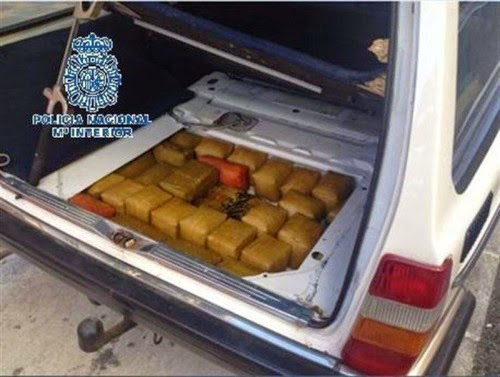
HASH trafficking operation between Spain and Denmark has been busted in Coin and Mijas, with six arrested. Operation Dynamo, a collaboration between Spanish national and Coin local police, saw a total of 94kg of the drug intercepted. The first 53kg was found July 25 in the trunk of a car driving through Mijas en route to Denmark. The other 41kg was later discovered in a house in Coin, according to the Malaga Province Police Station.


9.8.14

Tom Jones to light up Starlite in Marbella

IT’S not unusual to see a string of famous faces in Marbella, and this month Welsh music legend Tom Jones will join the ranks. He will be leaving the green, green grass of his Los Angeles home to grind and shimmy his way to the Starlite stage as part of the month-long luxury festival. The 74-year-old sex-bomb – who has received an OBE and knighthood and countless awards during his extensive 50-year career – will no doubt be a hit with the ladies of the Costa del Sol, who just can’t stop loving him. Unmatched in style and rhythm, Jones is listed alongside Julio Iglesias, Ricky Martin and The Pet Shop Boys on the impressive festival line-up. Starlite – now in its third year – brought an economic impact of €40 million last year, and organisers hope this will increase by 30% this year.

8.8.14

127 kilo cocaine haul found on Spanish naval training ship

127-kilo cocaine haul with a street value of almost €500,000 was found aboard the Spanish naval training ship Juan Sebastian Elcano docked in Cadiz.  The discovery was made by the Civil Guard who seized and searched the vessel when it returned to Spain following a six-month global voyage. The drugs are thought to have been loaded in Cartagena de Indias, Colombia, where the boat stopped in mid-April. In early May more than 20 kilos of cocaine loaded on ship was sold while it was docked in New York, with the Spanish authorities then tipped off by the US department of Homeland Security Investigations.  It took until last month when the ship moored off of the northwest Spanish city Pontevedra to detain three suspected sailors – two Spaniards and an Ecuadorian – for drug trafficking. It is  unknown whether the three  had accomplices, though US authorities report the men were paid €3,800 for every kilo they trafficked.

Swiss man in Malaga drink spiking swindle

Local Police in Malaga have arrested two employees at a city brothel on suspicion of taking €3,600 from a client after spiking his drinks. The victim, a 64-year-old Swiss man, has claimed that he was plied with alcohol or narcotics which left him confused and oblivious to the fact that large amounts of money were being taken from his credit cards. Once he discovered the unusual activity in his bank account, the victim presented himself at a police station to report the incident.

The police took the club owner and one of his employees, who authorised the transactions, into custody, where they were later charged with fraud. A total of €3,647 was taken from two credit cards belonging to the Swiss citizen. This is not the first case of this kind to have been reported recently. Last month, the managers of two brothels and a café in Valencia were accused of defrauding €95,000 from clients using the same methods of drink spiking. The majority of those affected by this type of crime are tourists who do not generally notice that the money has been taken until they have returned to their home countries, making the police’s job of registering and tracking the offences all the more difficult. The authorities are currently attempting to identify more victims in an effort to clamp down on drink spiking during these popular tourist months.

Criminal Hutch was intended target in Marbella shooting

 criminal Gary Hutch was the intended target of an assassination attempt in Spain which left an innocent boxer with serious injuries. Boxing coach and respected Sky Sports pundit Jamie Moore was attacked in the Spanish resort of Marbella outside a villa owned by Daniel Kinahan, son of crime boss Christy Kinahan on Saturday night. But gardai have received intelligence that the nephew of former criminal mastermind Gerry 'The Monk' Hutch was attending a party in Kinahan's house and he was the intended target of the shooting. Moore was shot at five times and hit twice - in the leg and the foot. Hutch previously survived after his best pal Barry Doyle was shot dead allegedly by the Russian mafia in February 2008, as part of a feud among traffickers.

Former Manchester boxer Moore had been training Matthew Macklin (32) all summer at Macklin's MGM gym in the Puerto Banus area ahead of a fight at Dublin's National Stadium on August 30. But yesterday it was announced that the fight has now been called off. Macklin, who has no involvement in crime, is the boxer who the feared Christy Kinahan's international crime syndicate supports. Senior members of the mob are regularly seen ringside at his fights. Yesterday in a statement, Macklin said: "I am disappointed to have to postpone my fight but in the light of the circumstances and the disruption to my preparation it is the right thing to do. "Every fight at this stage in my career is of huge importance and being 100pc on the night is vital." Macklin has been photographed with Gary Hutch in the past and sources say that gardai want to question Hutch about a number of serious crimes. Hutch was sitting beside hitman pal Barry Doyle when he was shot dead in 2008.

Doyle was gunned down as he tried to escape in a BMW X5 SUV which had come under fire on the outskirts of Estepona, about 10 miles from Marbella. Sources say that foreign gangs based in Spain have decided that Gary Hutch is a target because of his involvement in the Kianahan mob but detectives in the secretive Crime and Security section at garda headquarters have not yet fully established if this is the case. Hutch is well-known to gardai, having served time for being a getaway driver in a jewellery heist and is a close pal of notorious criminal 'Fat' Freddie Thompson. Before he left for Spain, Hutch was involved in a number of feuds in Dublin's north inner city and has been a target for gardai for years. Meanwhile well respected former boxing champ Jamie Moore used his Twitter account to reveal he was recovering from the gun attack.

7.8.14

Spain: INTERPOL Targets Trafficking Of Stolen Vehicles

In an INTERPOL-supported operation in Spain targeting the trafficking of stolen vehicles, nearly 20 vehicles were recovered and some 15 individuals arrested. Led by the Spanish National Police, Operation Paso del Estrecho (which means ‘crossing the straits’), was conducted from 28 July to 1 August at the port of Algeciras in southern Spain, a known route used by organised criminal networks to smuggle cars stolen from throughout Europe into North Africa.

With the assistance of INTERPOL’s Stolen Motor Vehicles (SMV) unit, police monitored car ferries leaving the port en route to Morocco, with some 5,000 vehicles screened against INTERPOL’s SMV database. INTERPOL coordinated the deployment of 28 experts from seven countries to support the operation. The experts are members of the INTERPOL Stolen Motor Vehicles (SMV) Task Force, comprising police and private investigators who support member countries with operations targeting the theft and trafficking of motor vehicles. The INTERPOL SMV database contains more than 7 million records submitted by 128 member countries. In 2013, countries searched the database more than 125 million times, resulting in 117,000 positive hits. “Operation Paso del Estrecho was very important because it allowed us not only to detect and recover stolen vehicles from Spain and other European countries, but also to obtain crucial information that will allow us to continue our investigations into the organized crime groups dedicated to illegal vehicle trafficking,” said Ángel Arroyo Morales, Head of the vehicle crime investigation unit of the Spanish National Police Central Squad of Organized Crime. “There is no doubt that with strong cooperation between INTERPOL and police across Europe and beyond, we will continue to recover even more stolen vehicles before they can be used for criminal purposes,” he concluded. In addition, 15 people were arrested during the operation, including one Ukrainian and two Spanish nationals arrested in connection with a major investigation of the Central Squad of Organized Crime of the Spanish National Police.

They are suspected of being the masterminds behind a vast trafficking ring transporting stolen luxury cars between Spain and Ukraine, via Poland and Moldova. The stolen vehicles seized came from various European countries including Belgium, France, Germany, Italy, the Netherlands and Sweden, demonstrating the transnational character of this crime. “The trafficking of stolen vehicles is a crime that knows no borders. The only way to effectively combat the organized criminal networks behind this crime is therefore through coordinated joint actions, as evidenced by this successful operation,” said INTERPOL’s Director of Specialized Crime and Analysis, Glyn Lewis. Operation Paso del Estrecho is an annual initiative conducted by Spanish police in Algeciras – a major gateway between Europe and Africa which sees approximately 4.8 million people and 1.3 million vehicles pass through each year – to prevent stolen vehicles from leaving the country and to identify and disrupt the criminal groups responsible for the illicit trafficking. Highlighting the links between organized crime and the trafficking of stolen motor vehicles – which are often used in the commission of other serious crimes – is a key part of INTERPOL’s global Turn Back Crime campaign. The campaign aims to raise awareness of these hidden links, and of the very real effect these crimes can have on people’s daily lives.

6.8.14

Major crime gang link as Matthew Macklin’s coach survives assassination attempt

Former European boxing champion Jamie Moore is under armed police guard in a Spanish hospital after he was shot in the legs in Marbella at the weekend. 

Moore is currently based in Spain with his wife and two children where he is training Irish boxer Matthew Macklin at the MGM gym in Puerto Banus ahead of his upcoming fight in the National Stadium on August 30. Moore was shot in both legs and the foot when the gunman targeted him after he left a party on Saturday night but his injuries are not believed to be life-threatening. “Just to let everyone know Jamie Moore is still in hospital but he should be ok,” Macklin tweeted last night. “He was shot in his legs but the doctors have said there shouldn’t be any serious or permanent damage done.”

The coach and well-respected Sky Sports pundit who has no involvement in crime agreed to become Macklin’s coach last year, but gardai sources have indicated that “special surveillance plans” are in place for the upcoming fight. The villa where Moore was shot is owned by boxing manager Daniel Kinahan, a key member of the Christy Kinahan crime syndicate which operates a sizeable crime operation on Spain’s infamous Costa del Crime. Nicknamed the ‘Tipperary Tornado’, Birmingham-born Macklin has no involvement in crime but has been photographed in the company of major gangsters Gary Hutch and Daniekl Kinahan at major events.

30.7.14

Ebola virus a threat

"The risk to UK travellers and people working in [affected countries] of contracting Ebola is very low but we have alerted UK medical practitioners about the situation in West Africa and requested they remain vigilant for unexplained illness in those who have visited the affected area. "It is important to stress that no cases of imported Ebola have ever been reported in the UK and the risk of a traveller going to West Africa and contracting Ebola remains very low since Ebola is transmitted by direct contact with the blood or bodily fluids of an infected person." BBC global health correspondent Tulip Mazumdar said the West African outbreak had been going on for four months. In that time local people had been looking after the sick and carrying out burials, which could actually help to spread the virus, she added. Ebola kills up to 90% of those infected, but patients have a better chance of survival if they receive early treatment. The outbreak - the world's deadliest to date - was first reported in Guinea in February. It then spread to Liberia and Sierra Leone. Ebola virus disease (EVD) Symptoms include high fever, bleeding and central nervous system damage Fatality rate can reach 90% Incubation period is two to 21 days There is no vaccine or cure Supportive care such as rehydrating patients who have diarrhoea and vomiting can help recovery Fruit bats are considered to be virus' natural host

Massive increase in Brits abroad drug arrests

DRUG arrests of Britons in Spain have soared, with an incredible 68% increase on the previous year. In total, 708 Brits have been arrested overseas on drug charges already this year – a shocking 173 of which were in Spain, according to the UK’s Foreign Office. A worrying trend is the reported rise in the use of a party drug named ‘Cannibal’ – due to its tendency to dramatically increase aggressiveness. It is apparently being distributed widely in parts of Spain, including the Balearics. A British man was arrested in Magaluf, after biting beachgoers while high on the drug. The rapid rise in drug-related arrests is due to a serious crackdown on dealers launched by police this year. The second-largest number of drug arrests involving Britons last year was in America, with 102 cases.

Forest fire in Casares

FOREST fire raged today near Casares. The fire was very near the site of Manilva’s Roman baths, inland from Sabinillas. Three helicopters and an aircraft were sent by Infoca in response, and emergency services rushed to the scene. A second fire station was reported to have sent emergency response teams as support.

EU Must Investigate CIA European Prisons Case

EU member states should carry out a thorough investigation into CIA-run prisons in Europe, where the inmates were subjected to torture, Russian diplomat Konstantin Dolgov said Monday. "Human rights activists are reasonably demanding the government of Poland to finally conduct an effective investigation into secret CIA prisons on its territory. Similar steps should be taken by other EU member states on which territories CIA torture camps operated," the Russian Foreign Ministry’s Special Representative for Human Rights wrote on his Twitter page. Last week, the European Court of Human Rights (ECHR) ruled that Poland violated an international treaty to protect human rights by hosting secret CIA prisons on its territory. The case was filed by two men who charge they were taken to a secret CIA black site in a Polish forest and subjected to torture before being transferred to Guantanamo Bay. An investigation into the detainees' treatment was opened in Poland in 2008 but is still not concluded – a situation that has been condemned by the UN's anti-torture body. Poland is one of a number of European countries accused of hosting secret CIA prisons. Meanwhile, Romania, Bulgaria, and Lithuania also have had allegations made against them for being part of the CIA black site network.

Suspicion of attempting to smuggle drugs arrests in Morocco

The Cyprus Foreign Ministry has confirmed that five Cypriots have been arrested in Morocco on suspicion of attempting to smuggle drugs out of the North African country. The Cypriots – whose ages are still unknown but are said to be over “18 years of age” – were arrested last week as they attempted to leave the country and are said to be looking at criminal charges relating to drug trafficking. Although the exact amount was unconfirmed, sources yesterday suggested that the group attempted to smuggle 15 kilos of hashish out of one of the country’s airports. “We can confirm that five Cypriots have been detained in Morocco and we are liaising with our Embassy in Paris, which is also responsible for Morocco, in an attempt to stay in contact with the individuals,” Ministry official Petros Kestoras told The Cyprus Daily on Tuesday. “We are as yet still unaware as to the exact amount of illegal substances they are said to have reportedly attempted to smuggle. We are also unaware of the exact substances. We do know that criminal procedures are ongoing and that the five individuals are obviously in police custody.” Morocco is one of 32 countries that impose capital punishment for offences involving the illegal importing, exporting, sale, or possession of narcotic drugs and psychotropic substances. But there has only been only one execution since 1983, and it happened in 1993. A total of 198 people were sentenced to death between 1956 and 1993, although there was an 11 year lull in executions between January 1982 and August 1993. The issue over capital punishment is a hot topic in Morocco. Officially, the stance of the current government is for "de facto" abolition but the Ministry of Justice has declared that terrorism is still an obstacle to "de jure" abolition. Figures from the US State Department claim that – until 2010 - a total of 104 inmates were on death row. According to a United Nations report, Morocco is a major source for cannabis, of which several hundreds tons reach mainly European markets every year.

Cannabis cultivation is concentrated in the underdeveloped region of the Rif in the North, for which the Government has adopted a national five-year development programme. In addition to the significant illicit trafficking of cannabis resin, the country is affected by growing international trafficking of heroin and cocaine and by related organised crime, including money laundering. As the main supplier country, “Morocco has long been a popular route by which drugs enter Europe”. It is a transit point for the ‘hashish’ consumed in Europe, but also of other illegal drugs principally coming from Latin America and East Asia.

The coast of Spain is the most common landing point of the drug, and to a less extent France, United Kingdom and other European countries Back in December 2012, Spanish police seized eleven metric tons of hashish smuggled from Morocco on trucks with tanks rigged to hide the drugs. Thirty five people were arrested in what was described as the breakup of a major smuggling ring that fed the European market.

29.7.14

Lionel Messi to be prosecuted for alleged tax evasion

A Spanish court will push ahead with prosecuting the Barcelona forward Lionel Messi for alleged tax evasion despite a recommendation from the public prosecutor the charges be dismissed. The prosecutor argued in June that Messi’s father Jorge was responsible for the family’s finances and not the four-times World Player of the Year. However, the court in Barcelona has decided that Lionel Messi could have known about and approved the creation of a web of shell companies that were allegedly used to evade taxes due on income from image rights. The judge in the case ruled that the case against both Messis should continue. Argentina’s Messi and his father were accused last year of defrauding the Spanish state of more than €4m (£3.1m) by filing false returns for the years 2006 to 2009. They have denied wrongdoing.   One of the world’s highest-paid athletes, Messi earns just over $40m (£23.5m) a season in salary and bonuses, according to Forbes magazine, as well as about $23m from sponsors. The magazine has him as the fourth top-earning athlete behind the boxer Floyd Mayweather, Real Madrid footballer Cristiano Ronaldo and basketball player LeBron James.

Third of holidaymakers fall victim to crime in Spain

A new study shows that one in every three Irish people robbed while on a foreign getaway believe they, or a travelling companion, "looked like a tourist" when targeted by thieves. Men are more likely to be robbed with a map in hand or camera around their neck with 33pc of those targeted admitting they were an obvious target for opportunistic thieves, compared to 25pc of women. Overall more than one in every 10 Irish people (12pc) admitted to being robbed while on their holidays in the study by AA Ireland. Men are more commonly targeted than their female counterparts while abroad.

Spain is the holiday destination where most Irish people are robbed with a third of those surveyed revealing they had been robbed there, followed by France and Italy – three of the most popular places for Irish people to holiday. Of the 3,000 holidaymakers surveyed, more than one in every 10 (12pc) said they had been pick pocketed while only slightly less (10pc) said they had items stolen from their accommodation. Another one in 10 had their bank card stolen while the same number revealed they were targeted on public transport. Only 3pc said they were mugged or had their passport or bags stolen. Nearly three out of four (72pc) reported they have never been targeted by thieves while on holidays.

AA Ireland spokesperson Miriam O'Neill said it was important to "blend in" with the locals as much as possible to avoid being targeted. "It's a question of being conscious of your surroundings and making you and your belongings as inaccessible as possible. I'd always advise travellers to know what's covered in their travel insurance too," she said. The majority of robberies are opportunistic, the survey reveals. However, one couple were raided after culprits punctured their tyre then posed as good Samaritans before robbing them. Another person said they were almost robbed by a woman with a baby strapped to a fake arm, leaving her actual hand free to pick pocket.

27.7.14

Bandidos sergeant-at-arms arrested over Broadbeach bikie brawl

DETECTIVES have charged yet another bikie over last year’s infamous Broadbeach brawl. Officers from the crack bikie squad Taskforce Maxima on Saturday arrested the national sergeant-at-arms of the Bandidos at Beenleigh for his role in the now-infamous stoush on September 27 last year. His arrest takes the number charged over the fracas, which saw bikies brawling in the middle of the Broadbeach restaurant precinct in front of stunned tourists before storming Southport Police Station, to 31. The shocking incident was the catalyst for the Newman government’s fierce crackdown on outlaw motorcycle gangs. The 39-year-old Bandido has been charged with one count of rioting and is expected to appear at the Beenleigh Magistrates Court on Monday. Detective Inspector Brendan Smith of Taskforce Maxima said, “Today’s arrest shows we will be relentless in our efforts to investigate all aspects of the Broadbeach incident,” he said. “The passage of time does not affect our resolve.” The other 30 bikies already charged are facing trial on the Gold Coast later this year.

26.7.14

Colombian cocaine smuggler gets 15 years

A federal judge in Tampa sentenced a cocaine smuggler on Friday to more than 15 years in prison. U.S. District Judge James S. Moody Jr. sentenced Luis Alberto Urrego-Contreras to 15 years and six months in federal prison for conspiracy to distribute five kilograms or more of cocaine. In January 2005, Urrego-Contreras, who was known by the nickname “Bacon,” bought a Beechcraft King Air airplane from a St. Petersburg business. He bought the plane on behalf of Colombian cocaine trafficker Fabio Enrique Ochoa-Vasco, according to the federal court. In June 2005, the plan was for the plane to fly from Venezuela to Colombia to retrieve 2,000 kilograms of cocaine. But when the pilot saw the Colombian Air Force was monitoring the Colombian airstrip, the pilot flew back to Venezuela where the pilot and co-pilot were arrested, according to the federal court. In October 2010, Urrego-Contreras was arrested at the American Embassy in Bogota, Colombia, according to the federal court. He agreed to speak to agents where he identified Ochoa-Vasco in several photographs and others involved in the smuggling conspiracy, according to the federal court. Urrego-Contreras told investigators that he was paid $50,000 to $100,000 for each cocaine load. He admitted to investigators that he was responsible for 1,000 kilograms of cocaine that was flown from Colombia to Mexico and later distributed in the United States by Ochoa-Vasco, according to the federal court.

Police are keeping watch on five drug traffickers trapped on a ship in Málaga

The initially eight drug traffickers were released by the National Court following the reform, carried out by Justice Minister, Alberto Ruiz-Gallardón which considered the Spanish Court is not competent to judge a ship seized in international waters.
Fri Jul 25, 2014 - 13:50

Following the Supreme Court’s overturning of the reform of Universal Justice Law it could be the drug traffickers involved could now be prosecuted in the Spanish Court, and for that reason the police are keeping watch.

mayak2.jpg
The Mayak in Málaga Port


The vessel was intercepted last March when 30 nautical miles SE of Málaga. The 63.5 metre long ‘Mayak’ was constructed in 1968 and was flying the Sierra Leona flag. The investigators call this type of ship the mother ship, because they receive and supply drugs to other smaller ships which bring the drugs to the European coast.


When customs boarded the ship, she had been loaded up just an hour before and eight crew were caught red-handed introducing the bales of drug into the bodega.

La Opinion de Málaga reports the arsenal of war weapons found in Málaga was used for their sale and international trafficking.

La Opinion de Málaga reports the arsenal of war weapons found in Málaga was used for their sale and international trafficking. 148 firearms have been impounded, with 55 grenades of different types, more than 160 ammunition cartridges of different calibre, three anti-tank mines, an artillery rocket and a heavy mortar. One of the detained spoke of the arms sale in a book.

Renfe in Costa del Sol hit by lack of drivers

Six lines to Fuengirola and Alora have been cancelled due to a lack of train drivers. The termination will affect almost 1,500 people. The drivers union says that many more drivers are needed to keep the services going. On the other hand, Renfe said that part of the problem is that driver absenteeism has gone up by 10%. The company also added that they were doing their best to ‘urgently resolve the problem to get things back to normal as soon as possible’. However, they gave no guarantee or target date on this. The drivers union believe that Malaga requires at least eight more drivers and that Renfe simply need to employ more. They point out that there are 500 unemployed drivers they could hire tomorrow and that they paid €22,000 to take the training course. They also warned that under these current conditions, problems are set to continue all summer long.

25.7.14

Spanish Government Cars With an Unsavory Past

A nationwide raid on a criminal group recently netted the Spanish police an extensive booty: 52 cars and motorbikes, as well as two boats, and 6.5 tons of gold and silver. Rather than let the spoils go to waste, the Spanish interior minister and other top security officials lighted on a novel cost savings in these hard economic times.

Four of the cars, it turned out, were newly armored and better than the ones they had. So they decided to use them. Jorge Fernández Díaz, the interior minister, got special permission in April from a court in Valencia to use the armored cars for police purposes. The court is handling the investigation into the criminal group and overseeing its seized assets. Confirming a report published this week in the newspaper El Mundo, Mr. Fernández Díaz stressed the cost savings of the unconventional vehicle upgrade.

Four bulletproof cars used by the criminals are valued at about 400,000 euros, or nearly $540,000. “We are saving money for the public treasury, for citizens, and we are raising our means to fight these gangs with greater efficiency,” the minister told reporters. The secretary of state for security and the director general of the Spanish police are also using confiscated armored cars, which are far newer as well as lighter than their previous cars. In any case, officials said, the previous cars had been due for expensive maintenance and repair work. A 2011 cease-fire by ETA, the Basque separatist group, prompted significant cuts in government spending on armored vehicles and bodyguards to protect officials. The cease-fire also coincided with a financial crisis that put the spotlight on unjustified government spending in a time of austerity, which left many Spaniards struggling with tax increases and salary cuts. During a four-decade campaign of terrorism, ETA killed more than 800 people in bombings and assassinations. José María Aznar, a former Spanish prime minister, escaped with light injuries when his armored car was bombed in Madrid in 1995. At the time, he was the leader of the opposition Popular Party. But ETA, which issued a statement this month saying it had dismantled its military wing, has not killed anyone on Spanish soil since 2009. Spain’s government, however, says that the group must surrender unconditionally and turn over all its weapons. Defending the use of the confiscated armored cars, Mr. Fernández Díaz said it was not unusual for crime money to aid Spain’s public finances, or for the Spanish state to make use of “decommissioned” assets after criminal cases are closed.

Last year, for instance, money seized and accounts frozen as part of drug trafficking cases added €22.1 million, or nearly $30 million, to the Spanish treasury. Before getting the armored cars, the minister said, his security forces had already inherited some boats and aircraft from criminals, without providing a detailed listing. “This is not the first time, and hopefully not the last,” he said. What has become of the boats, he did not say.

24.7.14

Arrested Venezuelan General Hugo Carvajal narco arrest order from U.S Government.

General Hugo Carvajal was arrested in Aruba on Wednesday about 6 pm local time on arrival to the Caribbean island belonging to the Netherlands, which traveled on a false passport. Despite claiming immunity diplomatic , on his appointment as consul on the island by the government of Nicolas Maduro , border guards denied that status, because his appointment had not yet been accredited by the Dutch authorities .

These acted at the request of the United States , the Netherlands previously revealed the contents of an allegation that the Attorney for the Southern District of New York kept secret ("sealed indictment") against Hugo Carvajal. The general and was included in2008 in the black list of the U.S. Treasury, for "assistance" to the FARC , the Colombian guerrillas. He was accused of "protecting Venezuelan counternarcotics authorities drug shipments and providing weapons to the FARC."

Relations with governments and terrorists

Sources in Washington involved in collecting evidence against Carvajal, ensure that the general, called by many the alias of"Chicken" , is the most central figure in the plot of druglaunched by the own Hugo Chavez and whose activities have led out several generals, known as the "sign of the Suns" .

" Carvajal was responsible for collecting the drug FARC and controlled the entire distribution process to the United States and Europe , and also took care of the money laundering through the PDVSA oil 'say these sources, who believe their detention will "uncover large pot of money laundering conducted by PDVSA." The general came to Aruba precisely in a plane owned by a figurehead Rafael Ramirez , president of the oil. Besides the extraordinary point Carvajal can provide information on the relationship of Chavez's Venezuela with Hezbollah and Iran . "It's like Pablo Escobar and Vladimiro Montesinos together, a chief of intelligence to put drug lord , "they say.

Carvajal was head of the Military Intelligence Directorate (DIM) for much of the Chávez era , between 2004 and 2011 . then returned to be appointed to the post by Maduro in 2013, although he remained a short time.

The processing of extradition to the United States can take to resolve between diez and fifteen days . The extradition will be confronted by the Venezuelan government, which said in a statement that "categorically rejects the illegal and arbitrary detention" of Carvajal, whom he described as "diplomat".

19.7.14

Shakira is first person ever to reach 100 million Facebook likes

Shakira is officially the most liked person on Facebook after becoming the first person ever to reach 100 million likes. The superstar songstress hit the staggering social media milestone on Friday and was clearly delighted with the news.

Barcelona To Tackle Dog Walkers: Get a License Or Receive a Fine

The Catalan capital is set to unleash a new law that will force dog owners to get a license or face fines up to €600. From October, dog owners will be required to obtain a “civic license” before letting their pets walk around without a leash within one of Barcelona’s 103 designated dog parks. An “animal abuse” register will also come into effect with a prohibition of leaving animals tied up for more than two hours or leaving animals locked in a car for more than 20 minutes.

Is it balls, vagina, or both? Airbnb logo sparks wave of internet parodies

Is it balls, vagina, or both? Airbnb logo sparks wave of internet parodies The apartment-rental website launches its grown-up logo to a wave of ridicule – as well as claims of plagiarism

18.7.14

SPANISH police arrest UK gangland murder suspect

Police in Madrid have arrested William Thomas Robert Paterson, wanted over the murder of a gangland enforcer in a car park in Scotland.

Paterson, nicknamed Buff and Billy, was wanted over the 2010 death of  Kevin 'Gerbil' Carroll in a supermarket car park in Glasgow. The 34-year-old fled to Spain after that crime where he remained in hiding until his arrest, Spain's El Diario newspaper reported on Thursday. Paterson appeared on a ten most wanted crime list released by  the UK's Serious Organised Crime Agency and Crimestoppers as part of a campaign known as Operation Captura. This campaign targets criminals that UK authorities believe are on the run in Spain.

Passenger on Malaysia Flight Shared Eerie Facebook Post Prior to Taking Off

Cor Pan probably didn't realize the effect his post would have when he shared it. The Dutch citizen was aboard the Malaysia Airlines plane that was carrying 295 people and was shot down over Ukraine on Thursday. But prior to taking off, Pan took a snapshot of the plane and posted the picture on his Facebook page with the caption that translates to, "If it disappears, this is what it looks like," poking fun at the Malaysia plane that went mysteriously missing in March. The aircraft, which was shot down near the Russian border, was flying from Amsterdam to Kuala Lumpur when it fell near the city of Donetsk in a war-torn area which has become a stronghold for pro-Russian rebels. All the passengers onboard were killed.

Incredible Map Shows Airplanes Getting The Heck Out Of Ukranian Airspace

On a normal travel day, the airspace over Ukraine is some of the most congested in the world. It serves as a major cross roads for flights connecting major hubs in Europe with megacities in Asia. However, after Malaysia Airlines Flight MH17 was reportedly shot down earlier today, most of the world's major airlines have ordered their planes to avoid the area completely. The above map, which was tweeted by Newsweek, shows Ukranian airspace a few hours after MH17 lost contact with radar. Two of Europe's largest airlines, Lufthansa and British Airways, have both told Business Insider that they have ordered their planes away from the disputed region. To avoid the Russian-Ukraine conflict altogether, Lufthansa has specifically ordered their planes to take a southerly route over Romania.

17.7.14

REVEALED: Shocking failure to police drink-spiking in Spanish resorts

POLICE in Spain have apparently no official records for the crime of drink-spiking. Hospitals and town halls have also failed to give any indication of the severity of the problem, despite a terrifying 60% increase in sexual attacks in Spanish resorts last year. The shocking revelation comes as assaults from spiking begin to soar, with the summer season now well underway. “It is clearly becoming a bigger issue and particularly in the summer,” said a source at Marbella Town Hall.

16.7.14

We cannot see our greatest selves beyond giant shame trees that provides shade for our demons of guilt

 while we sweat in the harshness of the midday sun of our hang-ups, begging to believe we are worthy.

Released Alien from Border Crisis Arrested for Alleged Murder, Kidnapping in Texas

An illegal immigrant who was released by U.S. authorities with a Notice to Appear has been arrested for the alleged murder of a woman and kidnapping of children on U.S. soil. The alleged crimes occurred after the man was released. The man, Pedro Alberto Monterroso-Navas, entered the U.S. illegally with children and turned himself in to U.S. Border Patrol agents. He was processed and released, as are all illegal immigrants who come as unaccompanied minors or incomplete family units from Central America. The alien is from Honduras. The arrest was first reported by the Associated Press (AP), but Breitbart Texas has exclusively confirmed that the man was part of the Obama Administration’s catch and release policy for family groups from Central America. A U.S. Border Patrol source who spoke with Breitbart Texas on the condition of anonymity provided Breitbart Texas with the alien registration number for the man, and the event number for the man’s apprehension. He was processed in the McAllen station of the U.S. Border Patrol. The alien’s registration number is 202027386. The event number for his apprehension is MCS14061487. The “MCS” designates the McAllen station, the “1406” designates that the man was apprehended in June of 2014. A separate Border Patrol source confirmed that the man was apprehended on June 26, 2014 with two children he claimed were his own. He told U.S. authorities he had family in Metairie, Louisiana.

Shocking images showing two couples having sex outside nightclub sparks outrage online

This is the shocking photograph showing two couples having sex outside a nightclub. Two scantily clad girls are pictured sitting on boys’ laps in a car park outside Ed Divino in Belfast as other stunned revellers looked on. The jaw-dropping snap of the two couples, taken last Thursday, has gone viral with people posting their disgust online. One twitter post reads: “WTF is wrong with the young ones did they not learn after magaluf girl n slanegirl now another pic pops up :(.” Another posted: “People have no shame. This is traumatic.”

El Divino nightclub, Belfast: Picture of clubbers having sex in car park posted on Twitter, Instagram and Facebook sparks outrage

A picture of two female clubbers appearing to have sex with two men in a car park outside a nightclub has sparked outrage online. The image has been shared on thousands of social media accounts after being taken outside El Divino in Belfast after a student night last Thursday. It shows the two scantily-clad women on top of the men, with other revellers milling in the background, in scenes reminiscent of the recent video of a clubber giving oral sex to men in return for a drink in Magaluf.

British cyber-jihadist Babar Ahmad jailed in US

A British cyber-jihadist has been sentenced in a US court to 12-and-a-half years' imprisonment after admitting terrorism offences. Babar Ahmad, of Tooting, south London, had admitted conspiracy and providing material to support the Taliban. Ahmad has already spent almost 10 years in prison in the UK and US and his lawyer thinks he could be released in about seven-and-a-half months. He waived his right to an appeal as part of a plea agreement. The judge said she had to weigh the seriousness of the crime with Ahmad's good character, after reading thousands of letters of support and hearing from British prison officials who described him as an exemplary prisoner. The court in New Haven, Connecticut, handed down a sentence of 150 months, half of the 25 years the prosecution was seeking. Ahmad is expected to carry out the remainder of his sentence in New York's Metropolitan Correctional Center.

British cyber-jihadist Babar Ahmad jailed in US

A British cyber-jihadist has been sentenced in a US court to 12-and-a-half years' imprisonment after admitting terrorism offences. Babar Ahmad, of Tooting, south London, had admitted conspiracy and providing material to support the Taliban. Ahmad has already spent almost 10 years in prison in the UK and US and his lawyer thinks he could be released in about seven-and-a-half months. He waived his right to an appeal as part of a plea agreement. The judge said she had to weigh the seriousness of the crime with Ahmad's good character, after reading thousands of letters of support and hearing from British prison officials who described him as an exemplary prisoner. The court in New Haven, Connecticut, handed down a sentence of 150 months, half of the 25 years the prosecution was seeking. Ahmad is expected to carry out the remainder of his sentence in New York's Metropolitan Correctional Center.

8.7.14

LIVING IN A FASCIST STATE: Mentally ill people need to be helped, not hounded by the work Roaches

LIVING IN A FASCIST STATE: Mentally ill people need to be helped, not hounded


Neglect of the mentally ill is bad enough, but now consider how the Department for Work and Pensions deliberately torments them. I just met a jobcentre manager. It had to be in secret, in a Midlands hotel, several train stops away from where she works. She told me how the sick are treated and what harsh targets she is under to push them off benefits. A high proportion on employment and support allowance have mental illnesses or learning difficulties. The department denies there are targets, but she showed me a printed sheet of what are called "spinning plates", red for missed, green for hit. They just missed their 50.5% target for "off flows", getting people off ESA. They have been told to "disrupt and upset" them – in other words, bullying. That's officially described, in Orwellian fashion, as "offering further support". As all ESA claimants approach the target deadline of 65 weeks on benefits – advisers are told to report them all to the fraud department for maximum pressure. In this manager's area 16% are "sanctioned" or cut off benefits.

Of course it's not written down anywhere, but it's in the development plans of individual advisers or "work coaches". Managers repeatedly question them on why more people haven't been sanctioned. Letters are sent to the vulnerable who don't legally have to come in, but in such ambiguous wording that they look like an order to attend. Tricks are played: those ending their contributory entitlement to a year on ESA need to fill in a form for income-based ESA. But jobcentres are forbidden to stock those forms. These ill people's benefits are suddenly stopped without explanation: if they call, they're told to collect a form from the jobcentre, which doesn't stock them either. If someone calls to query an appointment they are told they will be sanctioned if they don't turn up, whatever. She said: "The DWP's hope is they won't pursue the claim."

Good advisers genuinely try to help the mentally ill left marooned on sickness benefit for years. The manager spoke of a woman with acute agoraphobia who hadn't left home for 20 years: "With tiny steps, we were getting her out, helping her see how her life could be better – a long process." But here's another perversity: if someone passes the 65-week deadline, they are abandoned. All further help is a dead loss to "spinning plates" success rates. That woman was sent back to her life of isolation: she certainly wasn't referred for CBT. For all this bullying, the work programme finds few jobs for those on ESA.

Failing to treat the mentally ill is bad enough, but this is maltreatment. There has been much outrage about lack of kindness and care in hospitals. Neglect of mental patients is every bit as bad, but deliberate cruelty by the DWP defies any concern for the wellbeing for the most vulnerable, let alone "parity of esteem".

Related Posts Plugin for WordPress, Blogger...

Share

Twitter Delicious Facebook Digg Stumbleupon Favorites More